
There is one image that has occupied me for years.
When the Titanic sank, many people spent almost two hours not believing the ship would really go down. The lifeboats were not full. They were half empty. Not because there were too few, but because nobody wanted to believe that the world was changing right then.
And sometimes I wonder whether we parents aren't doing exactly the same thing today. We see artificial intelligence, TikTok, algorithms, smartphones — and think: it won't get that bad.
The moment that changed everything
A family hotel, on holiday, at breakfast. Thirty families in the room, twenty-eight of them with tablets and phones on the table. Disney films. No conversation. No laughter. No eye contact.
I could barely eat. I just watched. And in that moment I knew I had to write this book.
When exactly did we stop talking to each other?
The problem isn't the phone
Many people believe the device is the problem. It isn't. The problem is that we use screens to replace relationship. As quiet. As occupation. As parenting.
At a wedding, the children sat at the table with YouTube. Candles, music, a beautiful evening — and everyone was looking at a phone. I asked myself: why don't children learn to spend thirty minutes with people?
My grandfather and the bee sting
Every week my grandfather rode his moped from Leutschach up to the mines in Upper Styria. In any weather. Meanwhile my grandmother raised ten children.
Today a bee stings my apprentice in the thigh. No allergy. A week off sick.
My point isn't that everything used to be better — I don't believe that. I only wonder whether we have cleared every difficulty out of our children's way. If we solve every problem for them, when do they learn to solve problems themselves?
Confidence doesn't come from parents removing every obstacle. It comes from children getting over obstacles. That is exactly why I love Hapkido: children fall, get back up, and try again. They move, they learn through play, and parents are amazed when their child sits still for two minutes.
I want more digitalisation, not less
At this point many will think: he's against digitalisation. Quite the opposite.
Go to a hospital. The same forms every time, the same questions every time, blood drawn again and again. Digitalisation is missing precisely where it would really help people.
I love digitalisation. I hate bad digitalisation.
What children need in a world with AI
My industry is changing completely right now. Business models disappear, jobs disappear, new ones emerge. So we have to ask which skills children still need at all.
Not knowledge — ChatGPT has that. Not memorising — AI does it better. But rather: solving problems, creativity, communication, empathy, courage and discipline.
The brain is a muscle
In London, taxi drivers have to carry 25,000 streets in their heads. Their brains change measurably because of it. Today we outsource our thinking.
Nobody would go to the gym and let a robot lift the weights. But that is exactly what we do with our brains.
AI should support thinking, not replace it. A knife can save a life or take one — the question is never whether we use it, but what for.
So what do we do tonight?
Knowing the problem is the easy part. Simply taking the phone away doesn't work. Five things that work in our family:
First: make real life more exciting. If you only take the phone away, the phone wins. Children need something more exciting — sport, music, cooking, nature, time. Not less screen, more life.
Second: distinguish between consuming and creating. There is screen time that only scrolls, and screen time in which something comes into being: coding, making music, editing videos, robotics, learning languages. The future belongs not to those who consume the most, but to those who create the most.
Third: teach children to use AI properly. A child can tell ChatGPT "do my homework" — or "explain fractions to me so that I understand them". The difference is enormous. AI should be a teacher, not a cheat sheet.
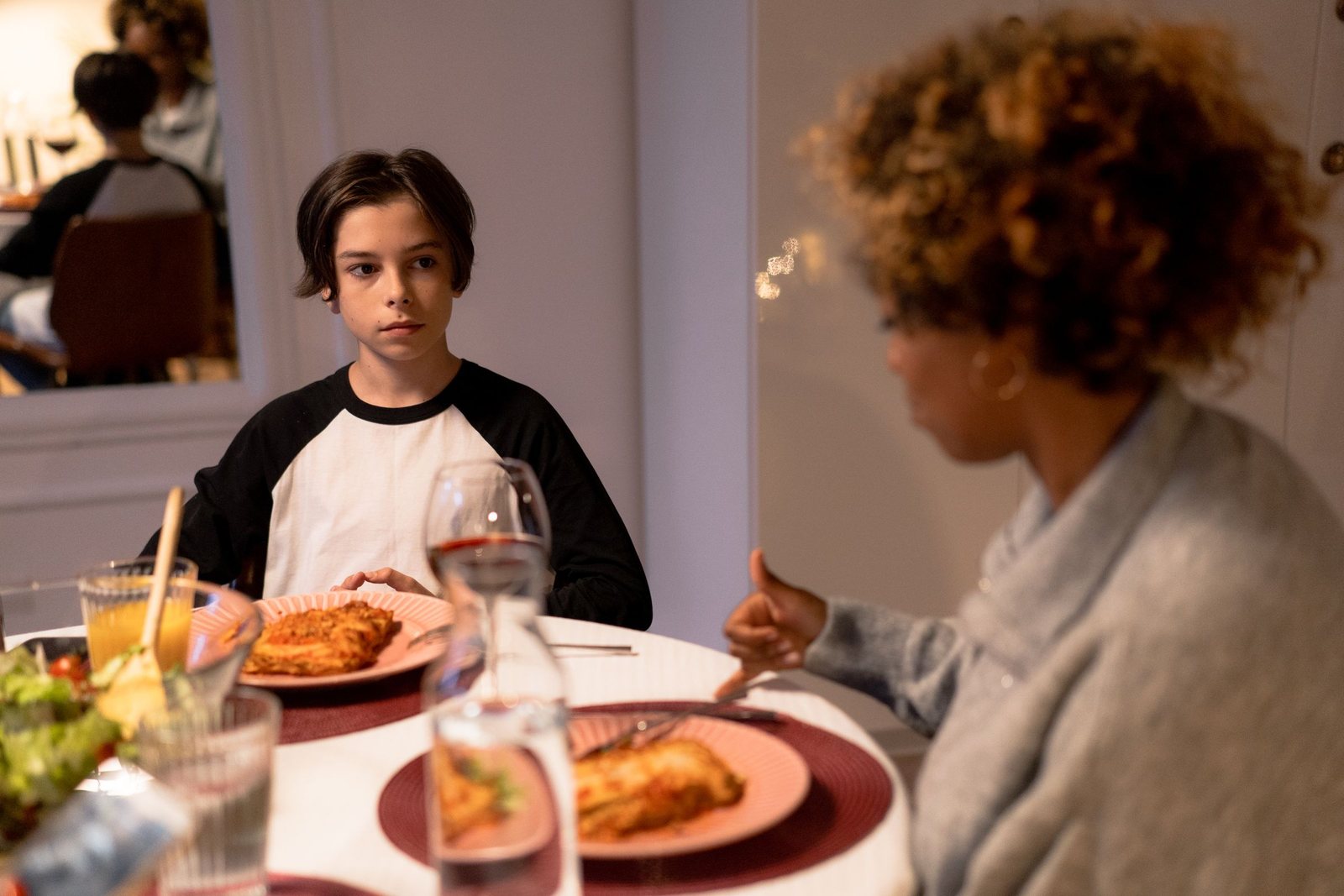
Fourth: three family rules. No phones at meals, because children won't remember the food later, they will remember the conversations. No screens in the hour before bed. And for every hour of screen, at least as much real world.
Fifth: four questions before the child gets the phone. Why do you want it right now? What do you want to do on it? What will you learn from that? What will you do afterwards? If no answer comes, this probably isn't the right moment.
The rats and hope
Scientists ran an experiment with rats. Both groups had to get through a difficult situation. The only difference was that one group believed it could change something, while the other believed it was entirely at the mercy of events.
The rats with hope fought far longer. Not because they were stronger, but because they had hope.
I believe that is exactly our task as parents. We won't abolish TikTok, we won't stop AI, we won't ban smartphones. But we can give our children hope: that they can solve problems, that they can think for themselves, that they are brave, that they are allowed to fail and get back up. Just like in Hapkido. Just like my grandfather.
It isn't an easy life that makes people strong, but the ability to deal with a hard one.
What I wish for
Not a world without smartphones. Children who can be happy without one too. Children who use AI and still think for themselves. Children who solve problems instead of only consuming answers. Children who have curiosity and are given room.
From politics I would wish for children to learn more of what no machine takes over: movement and sport, resolving conflict, respect, the much-quoted soft skills. I also think school uniforms, a compulsory year of community service and a basic income for families are worth discussing.
And so just one single task for today. When you get home, don't start by taking your child's phone away. Put down your own.
Because children don't listen to what we say. They watch what we do.
Our children's future isn't decided inside artificial intelligence. It is decided tonight, at the dinner table.