
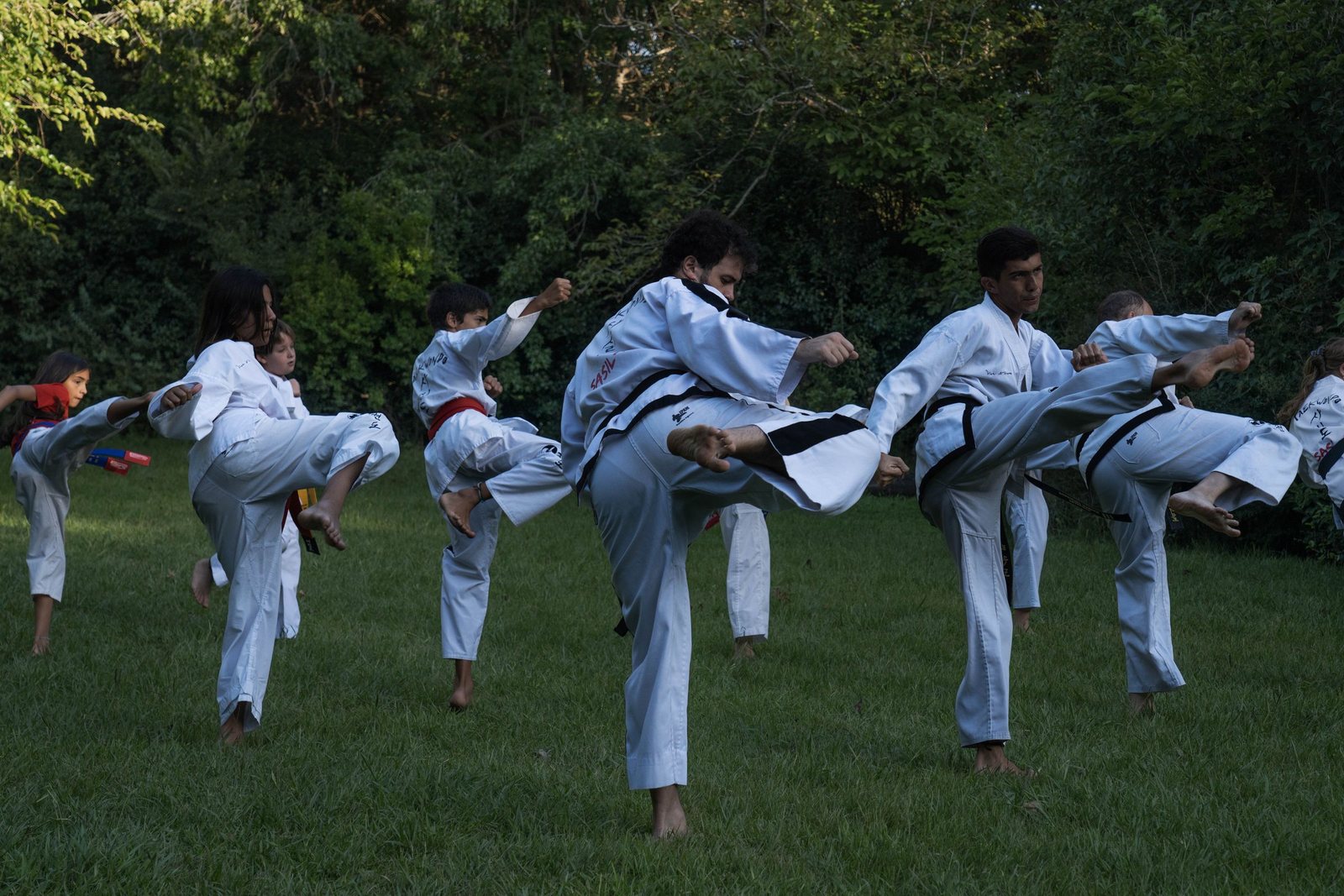
A line is attributed to Bruce Lee that could hang on any training mat: "I fear not the man who has practised 10,000 kicks once, but the man who has practised one kick 10,000 times."
On the mat, everyone gets it immediately. In business we consistently do the opposite.
The 10,000 kicks nobody fears
A new channel. A new tool. A second target group, because the first one is slow going right now. A product on the side, because a competitor looks successful with it. Every one of those decisions can be justified on its own. Added up, they produce a company that does twenty things at 60 percent and nothing at 100.
The insidious part: it feels like work. It even feels like progress, because something new is always starting. Except the new thing always happens at the same level — the level of the first attempt. And with nothing at all is the first time the level you get paid for.
The kick you have practised 10,000 times looks boring from the outside. It is the reason somebody wins.
What that looks like in practice
1Tool started in 2012 as a very simple contact manager with a newsletter function. That was the entire product. No modular system, no vision of business software.
What came after was ten years of the same movement: one module, then the next, then one a customer specifically needed. Always in the same system, always on the same foundation. Today there are close to 30 modules, from CRM through ERP to project management, and the software runs at small trade businesses just as it does at Post AG, Ricola, Mondi and Novartis.
In 2022 we renamed it from "KundenMeister" to "1Tool". That was not a change of direction — just a name that no longer fitted the thing. The direction had been the same for ten years.
I am not claiming it was elegant. For long stretches it was simply the same thing over and over. But that is exactly the point.
Focus does not mean staying small
One misunderstanding needs clearing up: focus does not mean a business must have exactly one product forever. It means everything you add grows out of the core instead of standing next to it.
The test is simple. If a new venture makes your existing customers stronger, it grows out of the core. If it needs an entirely new audience, it is a second company — with everything a second company costs. What matters is not the number of offerings, but whether they hang together.
The expensive part is the no
Focus is usually described as a selection problem: you just have to find the right thing. In my experience that is the easy part.
The hard part is the twentieth no to an idea that would genuinely work. Not to nonsense — to good ideas. To the lucrative job that does not fit the portfolio. To the flattering partnership. Every one of those noes feels like a missed opportunity, and in a sense it is. You trade it for depth.
If twenty years of running businesses have taught me one thing, it is this: capacity is limited and attention even more so. What you put into one project is missing from another — not theoretically, but in next week's calendar.
Repetition is not standing still
One objection remains: isn't this just tunnel vision with a nicer name? It can be. The difference is measurable.
The 10,000th kick is not the same as the first. It is faster, cleaner, costs less energy. If the thing you have been doing for years genuinely stops improving — if the error rate stays the same, the turnaround time stays the same, customers are exactly as satisfied as they were three years ago — then you are not repeating, you are stuck. That is a different problem, and it cannot be solved with a new line of business.
What the training teaches
I have been a Hap-Ki-Do instructor for children for many years. In training the connection is not in dispute at all: a technique is repeated over months until it holds. No child asks for something new after four weeks because the old technique has been "exhausted".
Adults ask exactly that — constantly, at work. Yet nothing about the physics changes between the mat and the office: what you do often enough, you eventually do better than anyone else around you. And what you do once, you have done once.
Bruce Lee's line is not a motivational formula. It is a description of how skill comes about.